Norfleet Giddings Bone: The Civil Engineer Who Helped Shape Texas Landscapes
August 2026
Author: Melinda Luna PE, CFM
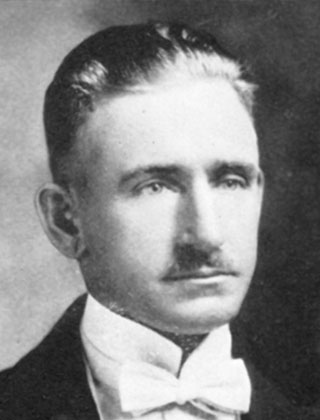
Norfleet Giddings Bone (1892–1978) was an accomplished civil engineer, landscape architect, military officer, and public servant whose work left a lasting mark on Texas infrastructure and park development. Although he is often recognized for his contributions to landscape architecture, his career was firmly rooted in civil engineering, where he combined technical expertise with an appreciation for natural landscapes. His innovative approach to planning and design helped shape military installations, state parks, and public spaces across Texas during the twentieth century.
Born on August 12, 1892, in Gainesville, Texas, Bone spent much of his youth in New Mexico. His interest in engineering led him to the New Mexico College of Agriculture and Mechanic Arts (now New Mexico State University), where he earned a Bachelor of Science degree in civil engineering in 1915. His education provided a strong technical foundation in surveying, municipal engineering, transportation, and infrastructure design—skills that would define his professional career.
Bone’s first engineering position was as an assistant city engineer in Douglas, Arizona. There he worked on practical municipal projects, including roadways, sewage systems, and city planning. These early assignments gave him valuable experience in solving the infrastructure challenges faced by rapidly growing communities in the American Southwest. His work demonstrated not only engineering competence but also an ability to balance technical requirements with long-term community development.
When the United States entered World War I in 1917, Bone joined the Aviation Section of the U.S. Signal Corps. Serving in Europe, he gained military engineering and organizational experience while supporting aviation operations. Following his discharge in 1920, he expanded his professional qualifications by studying landscape architecture at Texas A&M College, earning a second bachelor’s degree in 1923. Rather than viewing civil engineering and landscape architecture as separate disciplines, Bone recognized how they could complement one another in the planning of public works and large-scale developments.
During the late 1920s, Bone returned to military service with the U.S. Army Air Corps. One of his most significant assignments was overseeing the landscape engineering and site planning for Randolph Field near San Antonio, Texas. Randolph Field was one of the nation’s premier military aviation training facilities, and Bone played a major role in developing its landscape plan. His engineering responsibilities extended beyond planting trees and designing green spaces. He studied soil conditions, drainage, groundwater, and climate to create a durable and functional environment that supported both military operations and aesthetic goals. He also supervised the establishment of extensive nurseries to provide vegetation suited to the challenging Texas climate.
Bone later contributed to the design of Barksdale Field in Louisiana, applying similar planning principles to another important military installation. His work demonstrated that successful engineering projects required careful integration of transportation systems, utilities, environmental conditions, and long-term maintenance planning.
The Great Depression marked a new phase in Bone’s career. In 1932 he joined the National Park Service during the expansion of the Civilian Conservation Corps (CCC), a New Deal program that transformed public parks across the United States. As both a civil engineer and landscape architect, Bone became deeply involved in the planning and development of several Texas state parks.
Among his most celebrated achievements was his work at Bastrop State Park. Here Bone designed bridges, roads, picnic facilities, dams, drainage systems, and landscape improvements that blended naturally with the surrounding environment. His engineering philosophy emphasized using native materials and respecting the existing terrain, reducing environmental disruption while creating durable public infrastructure. Many of these features remain in use today, reflecting the quality of his planning and construction oversight.
Bone also contributed to projects at Balmorhea State Park, Lake Corpus Christi State Park, Lake Brownwood State Park, and several other recreational areas throughout Texas. His work helped establish standards for park engineering that balanced visitor access, environmental conservation, and long-term sustainability.
During World War II, Bone once again placed his engineering expertise in service of the military, joining the U.S. Army Corps of Engineers. He supervised the establishment and maintenance of grass-covered landing fields for military air bases in the San Antonio region. While these assignments may appear straightforward, they required detailed knowledge of soils, drainage, irrigation, and surface stability to ensure safe aircraft operations under demanding wartime conditions.
After the war, Bone continued serving the public through the Texas State Parks Board. As a regional supervisor, he managed maintenance, planning, and development projects across multiple state parks until his retirement in 1963. Throughout this period, he worked to preserve earlier CCC projects while adapting parks to accommodate increasing public use during the postwar recreation boom.
Norfleet Giddings Bone’s career spanned nearly fifty years and reflected an uncommon combination of engineering precision, environmental awareness, and public service. His projects demonstrated that infrastructure could be both practical and visually harmonious, setting an example for future generations of civil engineers and landscape architects. Although he never achieved widespread national recognition, historians increasingly acknowledge his contributions to Texas’s military installations and state park system.
Today, visitors to parks such as Bastrop State Park and the historic Randolph Field continue to benefit from Bone’s thoughtful engineering and planning. His legacy reminds us that civil engineering is not only about constructing roads and structures but also about creating places that serve communities while respecting the natural environment. Through his dedication and multidisciplinary vision, Norfleet Giddings Bone helped shape some of Texas’s most enduring public landscapes.