Historic Engineering Projects You Can Walk to around Downtown Fort Worth, Texas
Downtown Fort Worth is compact, walkable, and full of engineering landmarks that shaped the city’s growth from a frontier outpost into a modern urban center. The following article highlights several historically significant engineering and architectural projects—each within easy walking distance—along with their origins, designers, and the engineering challenges behind them.
1. The Flatiron Building
Designer: Sanguinet & Staats; Completed 1907
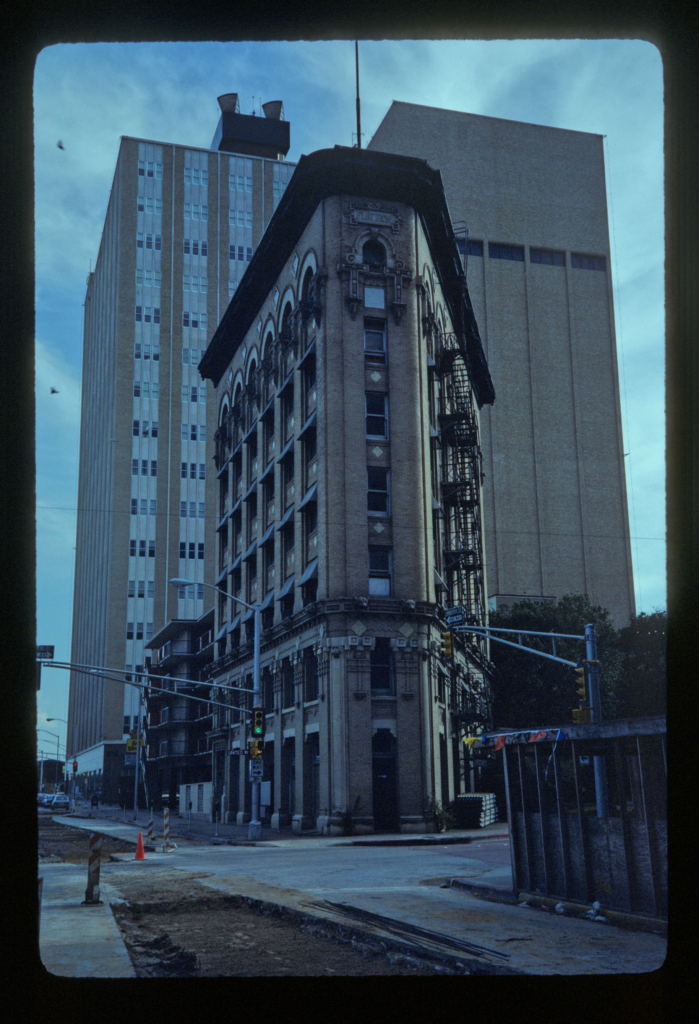
The Flatiron Building at 1000 Houston Street is one of Fort Worth’s most iconic early skyscrapers and a landmark of engineering innovation in Texas. Completed in 1907, it was designed by the architectural firm Sanguinet & Staats, pioneers in high-rise construction across the state. Inspired by New York City’s famous Flatiron Building, Fort Worth’s version was among the first in Texas to use reinforced concrete as its primary structural system—a bold choice at a time when steel-frame construction was still gaining traction in the region. The building’s triangular footprint, dictated by the sharp intersection of Houston and West 9th Streets, posed significant engineering challenges. Load distribution had to be carefully calculated to prevent stress concentrations at the narrow point of the triangle, and the formwork for the concrete had to be custom-built to accommodate the unusual geometry. Despite these complexities, the building rose quickly and became a symbol of Fort Worth’s early 20th-century boom. It stood as a testament to the city’s embrace of modern materials and urban density, offering office space in a compact footprint that maximized its corner lot.
The Flatiron Building also featured ornate detailing and large windows that reflected the Beaux-Arts influence popular at the time. Its engineering feats included fireproofing innovations and early elevator integration, which helped attract tenants and set a precedent for future high-rise development in the city. Today, the building remains one of the most photographed structures in Fort Worth, admired for both its architectural elegance and its role in advancing concrete construction in Texas. Whether you’re an architecture buff or just strolling through downtown, the Flatiron Building offers a striking glimpse into Fort Worth’s engineering past.
2. The Electric Building
Designer: Wyatt C. Hedrick; Completed 1929
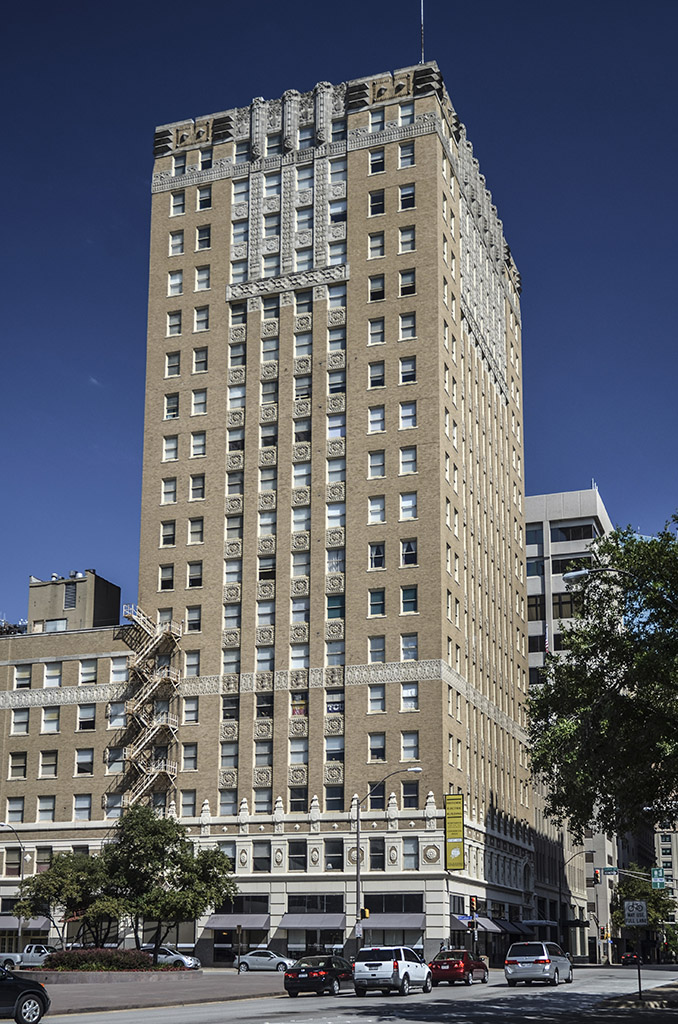
The Electric Building, completed in 1929, is a defining example of Fort Worth’s embrace of modern infrastructure and architectural ambition during the early 20th century. Designed by Wyatt C. Hedrick, one of Texas’s most prolific architects and engineers, the building was commissioned by the Texas Electric Service Company to serve as both a commercial office tower and a symbol of the city’s electrified future. Hedrick’s design fused Art Deco ornamentation with cutting-edge engineering, resulting in a steel-framed high-rise that could be constructed rapidly and support complex internal systems. The building’s steel skeleton allowed for vertical expansion without compromising structural integrity, a feat that was especially important given the building’s dual purpose: it housed office space, retail areas, and a full-scale theater.
One of the major engineering challenges was integrating the Hollywood Theater—a 2,500-seat venue—into the lower floors of the building without disrupting the load paths of the tower above. This required innovative interior framing and load distribution techniques, including reinforced concrete slabs and steel trusses that could span wide open spaces while supporting the weight of the upper stories. The building also featured advanced electrical systems for its time, including centralized air conditioning and lighting controls, which were rare in commercial buildings of the 1920s.
Hedrick’s team had to coordinate closely with utility engineers to ensure the building could handle high electrical loads while remaining safe and efficient. The exterior was clad in limestone and terra cotta, with geometric detailing and vertical lines that emphasized its height and modernity. Today, the Electric Building remains a preserved landmark in Sundance Square, admired for its architectural elegance and its role in Fort Worth’s transition into a modern urban center powered by innovation and design.
3. Tarrant County Courthouse
Designer: Gunn & Curtis (architects); Completed 1895
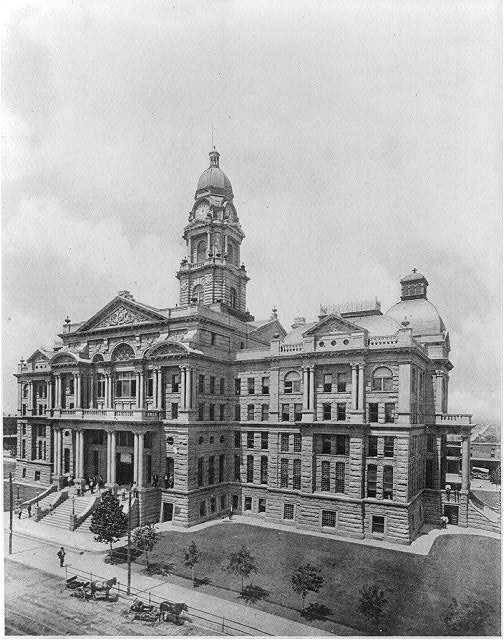
The Tarrant County Courthouse stands as one of the most imposing and historically significant civic buildings in North Texas, a monumental symbol of Fort Worth’s aspirations at the end of the 19th century. Designed by the architectural firm Gunn & Curtis, the courthouse was heavily inspired by the Texas State Capitol, adopting its Renaissance Revival style, symmetrical massing, and grand dome-like clock tower. Construction began in the early 1890s and required enormous quantities of pink granite quarried from central Texas, which was transported by rail and hand‑cut on site. This alone was a major logistical feat, as the stone had to be shaped precisely to fit the courthouse’s load‑bearing masonry walls; walls that support the building without a modern steel skeleton.
One of the greatest engineering challenges was the design and construction of the 150‑foot central clock tower, which had to withstand significant wind loads sweeping across the Trinity River valley. To prevent structural failure, engineers incorporated reinforced internal framing; a hybrid system combining masonry with steel supports, which was advanced for its time. The tower’s weight distribution also required careful planning to avoid settlement or cracking in the granite walls below.
The courthouse’s interior posed its own challenges. Large open courtrooms demanded wide spans without excessive columns, pushing the limits of late‑19th‑century structural engineering. Builders used heavy timber and steel beams to achieve these spaces while maintaining fire resistance and acoustic performance.
Despite controversies over its “too grand” of the cost, the courthouse became a defining landmark. Today, it remains one of Fort Worth’s most admired engineering achievements, a testament to craftsmanship, material innovation, and the city’s determination to project its growing civic identity.
4. The Texas & Pacific (T&P) Terminal
Designer: Wyatt C. Hedrick; Completed 1931
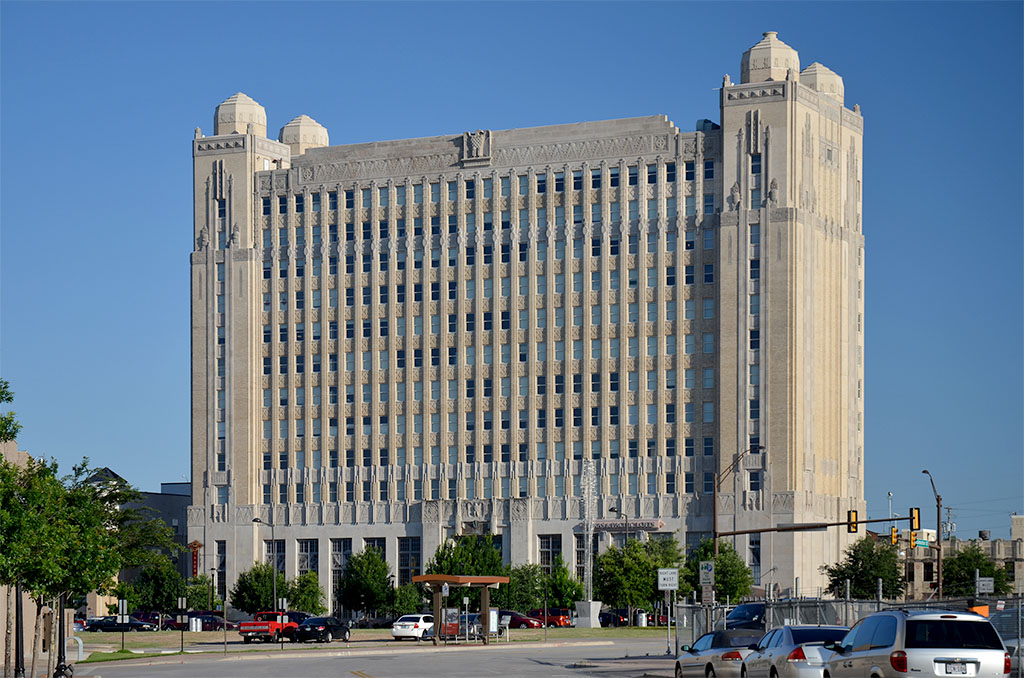
When the Texas & Pacific Terminal opened in 1931, it announced Fort Worth’s arrival as a modern transportation powerhouse. Rising boldly along Lancaster Avenue, the terminal was far more than a passenger station—it was a fully integrated transportation complex combining rail operations, freight handling, postal distribution, and a 13‑story corporate office tower. Designed by the prolific architect Wyatt C. Hedrick, with designer Herman P. Koeppe shaping its dramatic Art Deco aesthetic, the T&P Terminal remains one of the most ambitious engineering achievements in Texas.
Hedrick’s design embraced the Zigzag Moderne style, wrapping the building in limestone, polychrome brick, and intricately sculpted terra‑cotta. Eagles, chevrons, and geometric friezes animate the façade, each piece requiring precise anchoring to the building’s steel skeleton. Inside, the lobby dazzled with marble, decorative metalwork, and patterned ceilings—an opulent gateway to a thoroughly modern transportation hub.
Engineering the terminal was a formidable challenge. The building had to function simultaneously as a rail station, office tower, and postal facility, each with its own structural and mechanical demands. The steel frame had to support wide‑span concourses below while carrying the vertical load of the tower above, requiring long trusses, reinforced concrete floors, and vibration‑dampening systems to counteract the rumble of trains. Beneath the surface, engineers wove together baggage tunnels, mechanical rooms, and mail‑handling corridors within a tight urban footprint.
Complicating matters further, the terminal was constructed during a period of sweeping downtown redevelopment. As Fort Worth and the T&P Railway reconfigured streets, utilities, and rail lines, crews had to coordinate construction around shifting infrastructure—a logistical puzzle that demanded precision planning.
Despite these challenges, the Texas & Pacific Terminal emerged as a masterpiece of integrated design and engineering. Today, its restored lobby is considered one of the finest Art Deco interiors in the state, and the building continues to serve rail passengers through the Trinity Railway Express. More than a relic, the T&P Terminal stands as a testament to Fort Worth’s ambition—and to the era when engineering and architecture worked hand in hand to shape a city’s future.
5. The West Fork Water Works & Early Flood Infrastructure
Designer: City of Fort Worth and Trinity Water Authority; Completed late 1900s
Long before Fort Worth’s skyline rose and long before the Trinity River became a recreational corridor, the city’s survival depended on a series of early engineering decisions along the West Fork of the Trinity River. These early waterworks and flood‑control efforts—developed from the late 1800s through the early 20th century—formed the backbone of Fort Worth’s modern water infrastructure. Designed and executed by city engineers, the Fort Worth Water Department, and regional authorities that would eventually evolve into the Tarrant Regional Water District, these projects addressed the city’s most pressing challenges: seasonal flooding, unstable riverbanks, and the need for a reliable municipal water supply.
In the late 19th century, Fort Worth’s rapid growth strained its limited water resources. Engineers constructed some of the city’s first pumping stations, intake structures, and distribution mains along the West Fork, using steam‑powered pumps and early filtration systems to deliver water to downtown businesses and neighborhoods. But the river posed a dual threat: while it supplied water, it also flooded unpredictably. Heavy rains routinely caused the West Fork to overflow, damaging property, washing out roads, and threatening the city’s early industrial districts.
Stabilizing the river required a combination of bank armoring, channel shaping, and levee construction—all feats of engineering given the tools and technology of the era. Workers contended with soft soils, shifting river channels, and the constant risk of washouts during construction. Early engineers also had to design structures that could withstand both drought and deluge, balancing water supply needs with flood‑control demands.
These foundational projects set the stage for the massive flood‑control initiatives that followed, including the mid‑20th‑century levee system and the modern Trinity River Vision. Though modest compared to today’s infrastructure, the early West Fork waterworks represent Fort Worth’s first major investment in engineered resilience. Their legacy is still visible along the riverbanks—quiet reminders of the ingenuity that allowed the city to grow, thrive, and eventually transform its river into the civic asset it is today.