Engineering the Construction of Garner State Park
July 2026
Author: Melinda Lune PE, CFM, F.ASCE
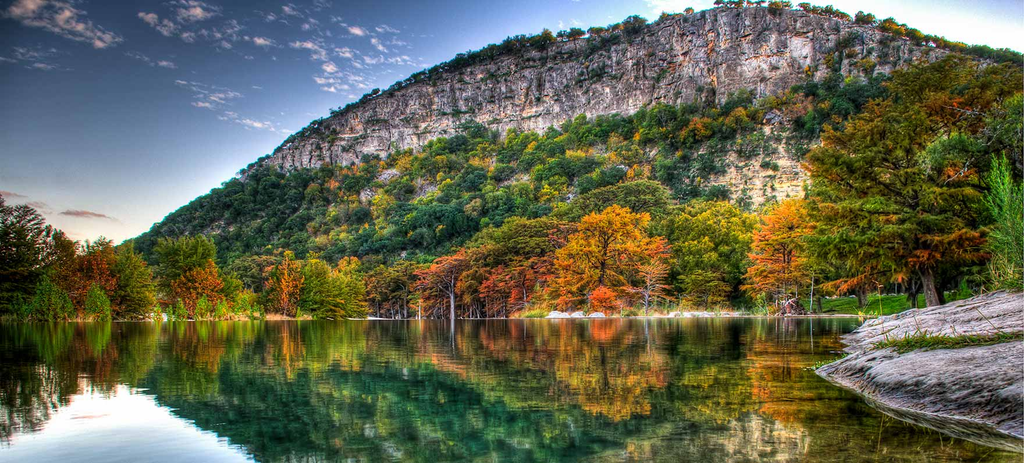
The development of Garner State Park during the 1930s stands as one of Texas’ most significant examples of integrated civil engineering and construction management. Constructed primarily by the Civilian Conservation Corps (CCC), the park was far more than a collection of recreational buildings. It was a comprehensive infrastructure project requiring the coordination of structural engineering, transportation engineering, geotechnical analysis, hydraulic design, and landscape planning. Working within the rugged terrain of the Texas Hill Country, engineers transformed nearly 1,800 acres of undeveloped land into a sustainable public recreation area while preserving the natural character of the landscape. The park remains a testament to engineering principles that continue to influence modern infrastructure design.
The first challenge in developing Garner State Park was site evaluation. Located along the Frio River in the Edwards Plateau, the area presented significant engineering obstacles including steep limestone bluffs, shallow rocky soils, variable elevations, and seasonal flooding. Before construction began, engineers conducted topographic surveys to evaluate slope gradients, identify stable building sites, and determine the most efficient locations for roads, utilities, bridges, and recreational facilities. Rather than significantly altering the natural terrain, designers adopted a site-sensitive approach that allowed the park’s infrastructure to follow existing landforms. This reduced excavation costs, minimized environmental disturbance, and improved long-term slope stability.
Geotechnical engineering played a critical role throughout the project. Much of Garner State Park is underlain by competent Edwards Limestone, providing an excellent foundation material with high bearing capacity and minimal compressibility. Engineers selected building locations where shallow spread footings could bear directly on limestone bedrock or dense native soils, reducing the potential for differential settlement. Areas with steeper slopes required careful evaluation to ensure adequate factor of safety against slope failure. By utilizing natural rock formations as structural support whenever possible, engineers reduced construction complexity while increasing the durability of roads, retaining walls, and public buildings.
Transportation infrastructure represented another major component of the project. Engineers designed park roads to follow the natural contours of the hills instead of cutting straight alignments through the terrain. This contour-based design reduced cut-and-fill operations, minimized erosion, and maintained manageable roadway grades suitable for automobiles of the 1930s. Curved road alignments also reduced excavation quantities while preserving scenic views for park visitors. Stone culverts and retaining walls were strategically placed to stabilize embankments and safely convey stormwater beneath roadways, preventing washouts during periods of heavy rainfall.
Structural engineering was essential in constructing the park’s buildings, bridges, retaining walls, picnic shelters, and recreational facilities. Most permanent structures utilized locally quarried limestone masonry combined with heavy timber roof framing. Limestone was selected because of its high compressive strength, durability, and local availability, making it both structurally effective and economically practical. Thick load-bearing masonry walls efficiently transferred roof loads into shallow foundations while also providing thermal mass that moderated indoor temperatures. Heavy timber framing offered favorable strength-to-weight characteristics and could be assembled using relatively simple construction equipment available to the CCC workforce.
Hydraulic engineering and drainage design were among the most important aspects of the park’s construction. The Frio River periodically experiences rapid rises following heavy rainfall, creating significant flood hazards for nearby infrastructure. Engineers developed an integrated stormwater management system consisting of stone-lined drainage channels, culverts, swales, retaining walls, and carefully graded slopes to control runoff throughout the park. Positive surface drainage directed water away from buildings and roadways, preventing erosion, reducing hydrostatic pressure around foundations, and preserving the bearing capacity of supporting soils. These drainage features worked with the natural watershed rather than attempting to eliminate natural flow paths, creating a resilient system that continues to function effectively decades after construction.
Construction management presented unique challenges because the Civilian Conservation Corps workforce consisted primarily of young men with little previous construction experience. Project engineers and supervisors were responsible for organizing labor, sequencing construction activities, maintaining quality standards, and ensuring worker safety. Daily operations required careful coordination between surveying crews, excavation teams, stonemasons, carpenters, equipment operators, and transportation personnel. Materials were sourced locally whenever possible, reducing transportation costs while supporting efficient project scheduling. The availability of nearby limestone quarries significantly improved productivity by minimizing hauling distances for one of the project’s primary construction materials.
Quality control was fundamental throughout construction. Masonry walls were carefully aligned to ensure proper load transfer, foundations were inspected before placement, drainage systems were graded to maintain adequate flow velocities, and roadway slopes were compacted to improve long-term stability. Although modern testing methods such as geotechnical instrumentation and computer modeling were unavailable, conservative engineering design and skilled craftsmanship produced infrastructure capable of serving the public for nearly a century. The emphasis on durability rather than minimum initial cost reflects a life-cycle engineering philosophy that remains relevant in modern infrastructure planning.
An additional engineering accomplishment was the successful integration of infrastructure with the surrounding environment. Rather than imposing standardized designs, engineers adapted each structure to the site’s topography, geology, and vegetation. Buildings appear to emerge naturally from the limestone hillsides, while roads, trails, and drainage channels blend into the landscape with minimal visual impact. This balance between engineering functionality and environmental preservation is now recognized as a fundamental principle of sustainable infrastructure design.
Today, Garner State Park continues to demonstrate the lasting value of sound engineering and effective construction management. Its roads, buildings, drainage systems, retaining walls, bridges, and recreational facilities remain functional because they were designed using fundamental principles of structural engineering, geotechnical analysis, hydraulic engineering, and careful project planning. The park serves not only as one of Texas’ most popular recreational destinations but also as an enduring case study of how interdisciplinary engineering can create infrastructure that is resilient, economical, environmentally compatible, and capable of serving generations of visitors.